




Ford 1.0-Liter Engine: Compact EcoBoost Performance with Impressive Efficiency
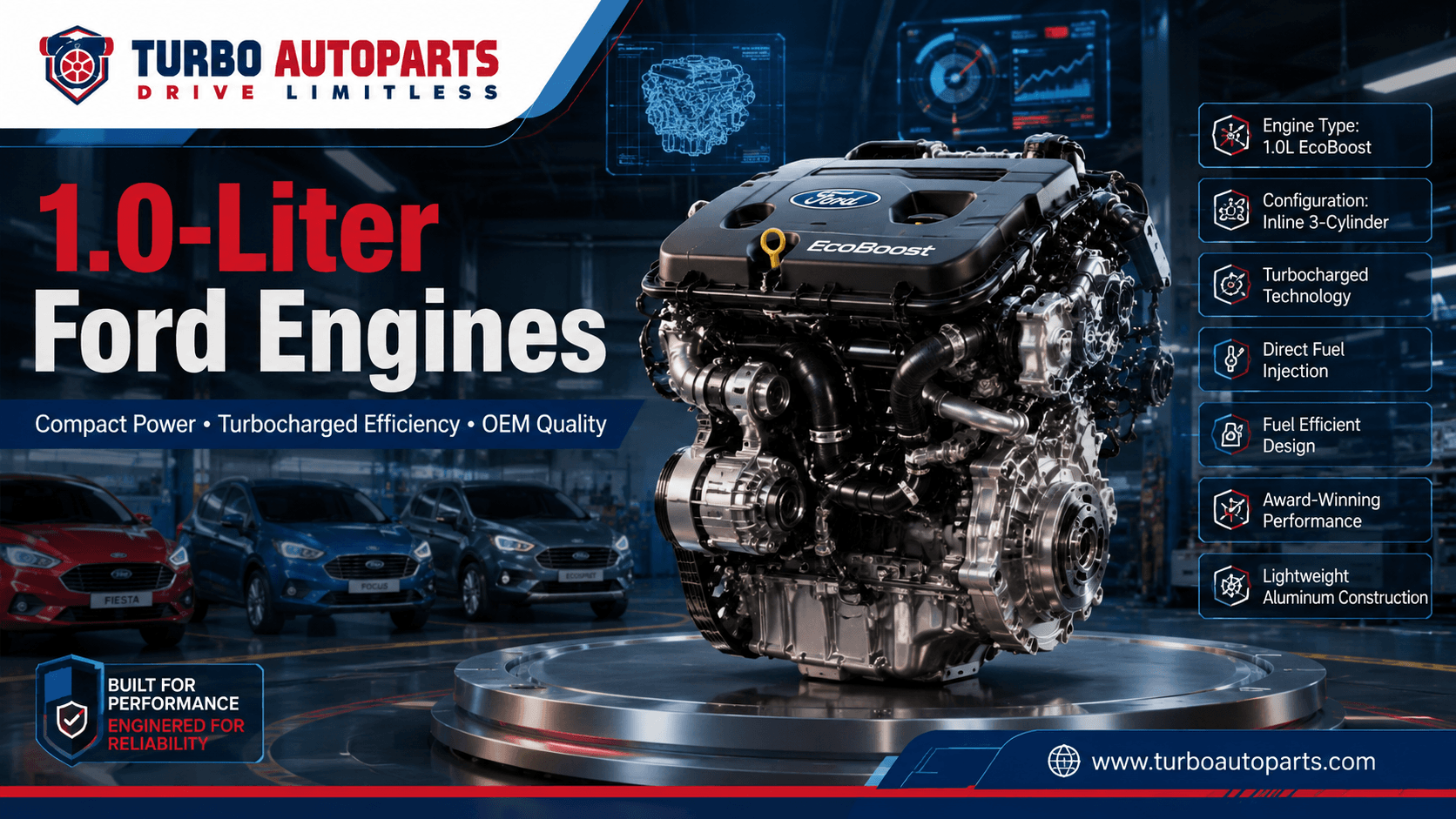
Ford 1.0-Liter Engine
The Ford 1.0-liter engine belongs to Ford's innovative Fox engine family, a series of compact and lightweight powerplants engineered to deliver excellent fuel efficiency without sacrificing performance. Introduced in 2012, the 1.0-liter three-cylinder engine quickly became one of Ford's most recognized small-displacement engines and remains in production across various global markets today.
Built using advanced engineering technologies, the Ford Engine features direct fuel injection and, in many applications, turbocharging through Ford's EcoBoost platform. Despite its small size, the engine provides a balance of power, fuel economy, and lower emissions, making it a popular choice for compact cars, crossovers, and commercial vehicles.
Ford 1.0 Ti-VCT Inline-3 Engine
The naturally aspirated version of the Fox engine is known as the 1.0 Ti-VCT (Twin Independent Variable Camshaft Timing). This engine utilizes either direct fuel injection or multi-port fuel injection depending on the model year and market.
Key Specifications:
Engine Configuration: Inline 3-Cylinder
Fuel System: Direct Injection or Multi-Port Injection
Aspiration: Naturally Aspirated
Horsepower: Approximately 84 HP
Production Years: 2018–2019
The 1.0 Ti-VCT engine was primarily used in select Ford Focus models and was designed to maximize fuel economy for daily commuting and urban driving.
Ford 1.0 EcoBoost Inline-3 Engine
The 1.0 EcoBoost is the turbocharged version of the Fox engine and has become one of Ford's most successful small-displacement powerplants worldwide. Through the addition of turbocharging, direct injection, and variable valve timing, this engine delivers significantly more power while maintaining excellent fuel efficiency.
Key Specifications:
Engine Configuration: Inline 3-Cylinder
Aspiration: Turbocharged
Fuel System: Direct Fuel Injection
Horsepower Range: 99 HP to 153 HP
Hybrid Compatibility: Available with Mild Hybrid (mHEV) Technology
Production Years: 2012–Present
Later versions of the 1.0 EcoBoost received upgraded turbochargers, improved engine management systems, and mild-hybrid assistance, resulting in higher power output and enhanced fuel economy.
Vehicles Equipped with the Ford 1.0 EcoBoost Engine
The versatile 1.0 EcoBoost engine has powered a wide range of Ford vehicles, including:
Ford Focus (2012–2021)
Ford Fiesta (2013–2021)
Ford EcoSport (2013–2021)
Ford C-Max (2012–2021)
Ford B-Max (2012–2021)
Ford Transit Courier (2014–2021)
Its compact design and lightweight construction made it an ideal choice for vehicles requiring strong efficiency and responsive performance.
Common Ford 1.0-Liter Engine Issues
Like many direct-injection engines, the Ford 1.0-liter EcoBoost can experience carbon buildup on intake valves over time. Because fuel is injected directly into the combustion chamber rather than over the intake valves, oil vapors and contaminants can accumulate and restrict airflow.
Some common maintenance concerns include:
Carbon deposits on intake valves
Coolant hose degradation on early models
Turbocharger wear with improper maintenance
Timing belt service requirements
Ignition coil and spark plug replacement intervals
Regular oil changes, high-quality fuel, and scheduled maintenance can significantly improve engine longevity and performance.
Why the Ford 1.0 EcoBoost Remains Popular?
The Ford 1.0-liter EcoBoost engine has earned numerous international awards for its innovative design and efficiency. Drivers appreciate its ability to deliver the performance of a larger engine while maintaining the fuel economy of a much smaller powerplant.
Whether you're researching engine specifications, checking vehicle compatibility, or looking for a replacement Ford 1.0-liter engine for sale, understanding the differences between the Ti-VCT and EcoBoost variants can help you choose the right engine for your vehicle.
With millions of units produced worldwide, the Ford 1.0-liter Fox engine continues to be one of Ford's most successful and technologically advanced small-displacement engines.