



How Can You Choose the Right Used Engine for Your Vehicle?
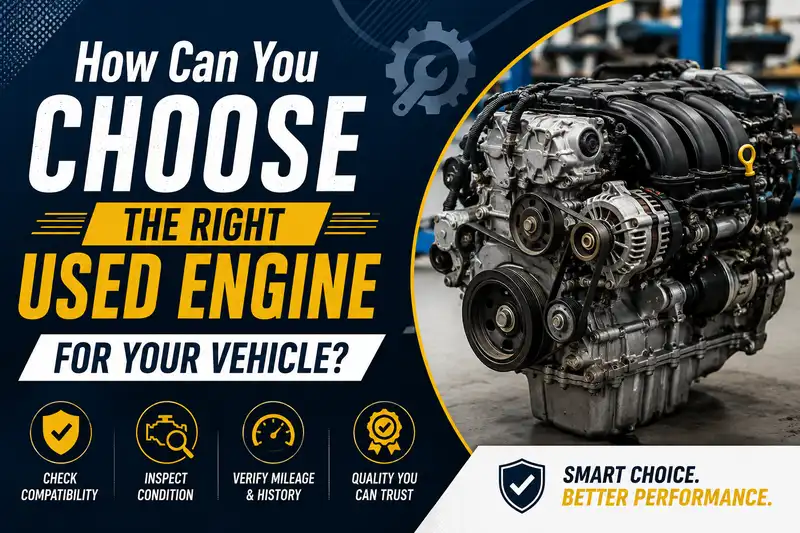
Finding the right replacement engine can be challenging when your vehicle develops a major mechanical problem. Engine replacement is a significant repair, so choosing the correct unit requires more than comparing prices. You need to consider compatibility, engine condition, mileage, vehicle specifications, warranty coverage, and installation requirements before making a purchase. For many vehicle owners, used engines for sale can provide a practical alternative to purchasing an entirely new replacement engine.
A used engine can help extend the life of a vehicle when the transmission, body, electrical system, suspension, and other major components remain in reasonable condition. However, not every replacement engine is suitable for every vehicle. Different production years, trims, drivetrains, and engine configurations can create important compatibility differences. Understanding these factors before ordering can help you make a more informed purchasing decision and reduce the possibility of expensive installation problems.
What Should You Check Before Buying a Used Engine?
The first step is identifying exactly which engine your vehicle needs. Vehicle manufacturers often offer several engine configurations for the same model. Two vehicles that look almost identical may have different displacement, cylinder configurations, fuel systems, electronic controls, or drivetrain specifications.
Your vehicle identification number can provide useful information about the original factory configuration. You should also verify the model year, engine size, fuel type, drivetrain, transmission configuration, and engine identification information before placing an order.
This information becomes particularly important when searching through engines for sale, because product listings may contain similar-looking engines intended for different applications. A visually similar engine does not necessarily mean it is a direct replacement.
Why Is Compatibility Important When Choosing a Replacement Engine?
Compatibility should be one of your highest priorities when evaluating used engines for sale. An engine needs to work with the vehicle's mechanical and electronic systems. Differences in sensors, wiring, mounting points, intake components, exhaust systems, computer controls, and emissions equipment can affect installation.
Some replacement engines may require transferring components from the original unit. Others may have configuration differences that make them unsuitable for a particular vehicle.
For this reason, never purchase an engine simply because the vehicle make and model appear to match. Confirm the complete application information before ordering. If fitment information is unclear, contacting the supplier and providing your VIN can help determine whether the engine is appropriate for your vehicle.
How Much Does a Used Engine Cost?
The cost of a used engine depends on several factors, including the vehicle application, engine configuration, mileage, availability, condition, and market demand. Popular engines that are widely available may have different pricing from engines designed for less common vehicles.
When researching used engine prices, avoid comparing listings based solely on the advertised amount. One listing may include a more complete engine assembly, while another may include fewer components. Warranty coverage, inspection procedures, mileage, shipping arrangements, and return policies can also affect the overall value.
The lowest price is not necessarily the lowest overall cost. A replacement with better documentation and appropriate warranty protection may provide greater value over the ownership period.
Is Buying the Cheapest Used Engine a Good Idea?
Choosing the cheapest available option can be tempting, particularly when you are already facing a major vehicle repair. However, price should be considered together with condition and compatibility.
An unusually inexpensive engine may have higher mileage, limited information about its history, fewer included components, or different warranty terms. That does not automatically mean the engine is poor quality, but it does mean you should investigate the listing carefully.
A better approach is to compare the complete purchase value. Look at the engine's application, recorded mileage, inspection information, warranty, return policy, shipping conditions, and seller support before making your decision.
Does Mileage Matter When Buying a Used Engine?
Mileage is an important consideration, but it should not be the only measurement of an engine's condition. A properly maintained engine with higher mileage may perform better than a poorly maintained unit with fewer recorded miles.
Whenever possible, find out the mileage associated with the donor vehicle and ask whether the supplier has information about the engine's condition. Inspection and testing information can provide additional confidence when evaluating a replacement.
The engine's previous use can also matter. A unit removed from a well-maintained vehicle may have a different condition profile from one recovered from a heavily damaged or poorly maintained vehicle.
What Is the Difference Between a Used, Rebuilt, and Remanufactured Engine?
A used engine is generally an engine removed from another vehicle and offered as a replacement after appropriate inspection. The internal components may remain in their existing configuration.
A rebuilt engine is disassembled and repaired, with components replaced or restored where necessary. The exact rebuilding process can vary depending on the supplier and the extent of the work performed.
A remanufactured engine normally goes through a more extensive restoration process. Components can be inspected, machined, replaced, and tested according to the manufacturer's or rebuilder's procedures.
These terms should not be treated as interchangeable. Before purchasing, understand exactly what type of replacement you are buying and what work has been performed on it.
Where Can You Find a Replacement Engine?
When searching for a replacement, buyers can consider automotive recyclers, salvage facilities, specialized suppliers, dismantlers, and online marketplaces. Local searches for used engines for sale near me can help identify nearby sources, while online suppliers can provide access to a broader selection.
Local purchasing may allow you to communicate directly with a supplier, while online shopping can make it easier to compare multiple applications and specifications.
Regardless of where you purchase, the important factor is not simply the location of the seller. You should verify the engine's application, condition, mileage, warranty, return terms, and available support before completing the transaction.
What Questions Should You Ask Before Buying?
Before purchasing used engines for sale, ask the seller for information that can help you verify the product.
Start by asking which vehicle the engine originally came from and whether its mileage is documented. Ask whether the engine has been inspected or tested and whether the seller can verify compatibility using your vehicle identification number.
You should also ask what components are included with the engine. Some replacement units may require you to transfer accessories or external components from your existing engine.
Warranty coverage is another important consideration. Understand the duration of coverage, what components are covered, what conditions apply, and how the claim process works.
Finally, ask about the return policy and shipping requirements before ordering. Understanding these details in advance can prevent confusion later.
Can You Buy Used Engines Online?
Yes, online purchasing has made it easier for vehicle owners to research and compare replacement engines. Buyers can review different applications, specifications, mileage information, pricing, and warranty options without visiting multiple physical locations.
However, online purchasing requires careful verification. Product titles can sometimes appear similar even when engines have different applications.
Before ordering online, compare the listing information with your vehicle's exact specifications. If you are uncertain about compatibility, provide your VIN to the seller and request fitment confirmation.
A reliable online supplier should be willing to provide clear information rather than asking customers to make compatibility assumptions themselves.
What Mistakes Should You Avoid When Buying a Used Engine?
One of the most common mistakes is choosing a replacement based entirely on price. Although affordability matters, an engine that does not properly match your vehicle can create additional expenses.
Another mistake is ignoring the engine identification code. Different versions of the same displacement can have important mechanical and electronic differences.
Some buyers also assume that every engine from the same model will fit. Manufacturers can change engine configurations between production years, trims, and drivetrains.
Failing to review warranty terms can also create problems. A buyer should understand the coverage before installation because warranty conditions may specify installation procedures or maintenance requirements.
Finally, remember that the engine purchase is only one part of the replacement process. Labor, fluids, filters, seals, gaskets, and other installation-related expenses can increase the final repair cost.
How Can You Compare Used Engines Before Buying?
A good comparison should consider more than the listed price. Begin with compatibility and then evaluate mileage, condition, testing information, warranty protection, included components, shipping, and return conditions.
For example, one engine may have a lower advertised price but provide less information about its history. Another may cost slightly more but include stronger documentation and warranty coverage.
The better choice is usually the option that provides the strongest combination of compatibility, condition, protection, and overall value.
This approach is especially useful when several used engines for sale appear suitable for the same vehicle.
Is a Used Engine Suitable for an Older Vehicle?
A replacement engine can be a practical solution for an older vehicle when the rest of the vehicle remains dependable.
If the transmission, suspension, braking system, electrical components, chassis, and body are in good condition, replacing the failed engine may allow you to continue using the vehicle instead of replacing it entirely.
However, you should evaluate the vehicle as a whole. If several expensive systems are already approaching the end of their service life, installing a replacement engine may not provide the best financial outcome.
Compare the expected repair expense with the vehicle's current condition, future maintenance requirements, and expected remaining service life.
What Should You Do Before Installing a Used Engine?
After purchasing a replacement, proper preparation and installation are important. The technician should inspect the engine and compare it with the original unit before installation.
Depending on the vehicle and engine condition, certain maintenance items may be appropriate to replace during installation. These can include fluids, filters, seals, gaskets, spark plugs, belts, and hoses.
The cooling system should also receive attention because overheating can damage a replacement engine. Electrical connections, sensors, mounting points, and other related components should be checked before starting the vehicle.
After installation, the technician should verify fluid levels, check for leaks, monitor warning lights, and confirm that the engine operates correctly.
Why Are Used Engines for Sale a Practical Replacement Option?
For many vehicle owners, used engines for sale offer a way to replace a failed powertrain without immediately replacing the entire vehicle. This can be particularly useful when the vehicle is otherwise reliable and has significant usable life remaining.
A properly matched replacement can restore vehicle functionality while allowing the owner to continue using a familiar vehicle. It may also provide access to original equipment configurations for older models where new replacement options are limited or expensive.
The actual benefit depends on the specific engine, its condition, compatibility, price, warranty, and installation requirements. Therefore, buyers should evaluate each replacement individually rather than assuming every used unit provides the same value.
How Can You Make a Safer Used Engine Purchase?
The safest approach is to research before ordering. Begin by identifying the exact engine configuration required for your vehicle. Use the VIN and other vehicle information to verify fitment.
Next, review mileage and condition information. Ask about testing and inspection procedures where available. Compare warranty coverage and return requirements before completing the purchase.
Finally, consider the complete cost rather than the initial engine price. Installation labor and related maintenance can significantly influence the final expense.
Taking these steps can make the buying process more predictable and help reduce the risk of ordering an incompatible replacement.
Final Thoughts
Choosing from used engines for sale does not have to be complicated when you know what information matters. The most important step is confirming compatibility with your specific vehicle before considering price.
Mileage, condition, testing, warranty coverage, included components, shipping, and return terms should then be evaluated together. A lower-priced engine is not necessarily the best choice if it creates compatibility concerns or provides limited protection.
For vehicle owners whose cars remain mechanically sound apart from a failed engine, a properly selected used engine can be a practical way to restore the vehicle and extend its useful life.
The key is to verify fitment, understand the engine's condition, compare the complete cost, and review warranty terms before purchasing.
Frequently Asked Questions
How do I know which used engine fits my vehicle?
Use your VIN, model year, engine configuration, drivetrain, and engine identification information to verify the correct application before ordering.
Is mileage important when buying a used engine?
Yes. Mileage can help with comparison, but it should be evaluated alongside condition, inspection information, previous use, and warranty coverage.
Can I install a different engine configuration in my vehicle?
Some conversions are possible, but they can require mechanical and electronic modifications. A properly matched replacement is generally easier to install.
Are junkyard engines a good option?
They can be an option for certain vehicles, particularly older applications. Buyers should verify mileage, condition, compatibility, testing, warranty, and return requirements.
What should I check before buying an engine online?
Confirm the exact vehicle application, engine configuration, mileage, condition, included components, warranty, return policy, shipping requirements, and fitment.
Is a used engine cheaper than a new replacement?
A used unit can have a lower purchase price than some new replacement options, although the actual cost depends on the vehicle application, availability, condition, and source.