



OEM vs Used Engine | Which Replacement Engine Saves More Money?
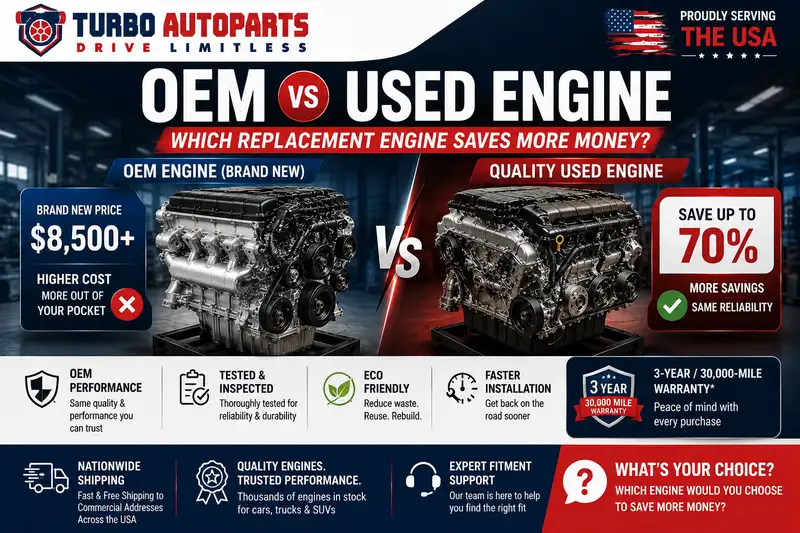
When an engine fails, one of the first questions every vehicle owner asks is whether to buy an OEM replacement engine or a used engine for sale. Both options can restore your vehicle, but they differ significantly in price, availability, warranty, and long-term value. Choosing the right replacement engine is not simply about finding the lowest price. It requires understanding your vehicle's age, budget, driving habits, and long-term ownership plans.
Many drivers automatically assume a new OEM engine is the best choice. However, in many situations, a quality-tested used engine provides the same factory performance while costing thousands of dollars less. On the other hand, some newer or specialty vehicles may benefit from an OEM replacement engine because of warranty requirements or advanced electronic systems.
This guide compares OEM vs used engine options, explains the advantages and disadvantages of each, discusses replacement costs, reliability, warranty coverage, and helps you decide which solution offers the best value for your vehicle.
What Is an OEM Engine?
An OEM engine (Original Equipment Manufacturer engine) is an engine produced by the same manufacturer that originally built your vehicle. It matches the factory specifications, emissions equipment, electronics, and performance characteristics of the original powertrain.
OEM engines are available as new, remanufactured, or factory replacement assemblies. They are commonly purchased for newer vehicles that remain under manufacturer warranty or require exact factory specifications.
Benefits of an OEM Engine
OEM engines offer perfect compatibility because they are designed specifically for your vehicle. Installation is generally straightforward, and factory performance remains unchanged. They also maintain the vehicle's originality, which may improve resale value.
Another advantage is that new OEM engines typically include manufacturer-backed warranty coverage and updated engineering improvements introduced after the vehicle entered production.
However, these benefits often come with a significantly higher purchase price.
What Is a Used Engine?
A used engine is an original factory engine removed from another vehicle. Most quality used engines come from insurance write-offs, low-mileage salvage vehicles, lease returns, or vehicles damaged in accidents where the engine remained unaffected.
Unlike rebuilt engines, used engines retain their original factory internal components. When properly inspected, compression tested, and verified for compatibility, a quality OEM used engine can deliver excellent reliability at a fraction of the cost of a new engine.
Many buyers choose a used engine with warranty because it provides OEM engineering without the premium price.
OEM Engine vs Used Engine: Key Differences
| Feature | OEM Engine | Used Engine |
|---|---|---|
| Purchase Price | Highest | Much Lower |
| Factory Specifications | Yes | Yes |
| Mileage | New | Varies |
| Availability | Limited for older vehicles | Often easier to find |
| Installation | Direct Fit | Direct Fit (VIN Verified) |
| Warranty | Manufacturer Warranty | Supplier Warranty |
| Best For | New vehicles | Older vehicles and budget-conscious owners |
For many vehicles older than five years, a professionally inspected used engine often provides the best balance of cost and reliability.
Which Option Saves More Money?
Cost is one of the biggest factors when replacing an engine.
A brand-new OEM engine may cost several thousand dollars more than a comparable used engine before labor is even considered. For older vehicles, investing in an expensive new engine may exceed the actual market value of the vehicle.
A quality used replacement engine can reduce total repair costs while preserving factory performance. Because OEM used engines are original factory units, they typically require fewer modifications than aftermarket alternatives.
Savings can also extend beyond the purchase price. Many inspected used engines include tested accessories and factory-installed components that reduce additional replacement costs.
Reliability: Are Used Engines Worth It?
Many drivers worry that used engines are less reliable than new ones. In reality, reliability depends more on the engine's maintenance history and inspection process than its age.
Before purchasing a used engine, buyers should request:
- VIN compatibility verification
- Compression test results
- Leak-down testing
- Engine mileage
- Donor vehicle history
- Service records
- Warranty information
A low-mileage OEM engine that has been professionally inspected may provide years of dependable service.
When Should You Choose an OEM Engine?
Although used engines offer outstanding value, certain situations favor a new OEM replacement.
An OEM engine may be the better option if:
- Your vehicle remains under factory warranty.
- You own a brand-new luxury vehicle.
- The manufacturer requires OEM replacement parts.
- Your insurance policy specifies OEM components.
- You plan to keep the vehicle for many years.
In these situations, the higher purchase price may be justified.
Why Buy Your Replacement Engine from Turbo Auto Parts?
No matter which engine type you choose, purchasing from a trusted supplier is essential.
Turbo Auto Parts supplies professionally inspected OEM used engines for domestic, European, and Asian vehicles. Every qualifying engine undergoes quality inspection before shipment and includes:
- 3-Year / 30,000-Mile Warranty
- Free Shipping to Commercial Addresses Across the USA
- No Extra Core Charges
- VIN Compatibility Verification
- Expert Fitment Assistance
Their experienced team helps customers select the correct engine, reducing installation issues and ensuring proper factory fitment.
Final Thoughts
Choosing between an OEM engine and a used engine depends on your vehicle, budget, and long-term goals. A new OEM engine offers factory-new condition and manufacturer support, while a professionally inspected OEM used engine provides significant savings without sacrificing compatibility or performance.
For many vehicle owners, especially those with older cars, SUVs, and trucks, a quality-tested used engine represents the best combination of value, reliability, and long-term performance. By verifying compatibility, reviewing inspection reports, and purchasing from a reputable supplier, you can confidently restore your vehicle while keeping repair costs under control.
Frequently Asked Questions
1. What is the difference between an OEM engine and a used engine?
An OEM engine is produced by the original manufacturer and may be new or factory-remanufactured. A used engine is an original factory engine removed from another vehicle. Both are OEM products, but a used engine has prior mileage.
2. Is a used engine as reliable as an OEM engine?
Yes, a professionally inspected OEM used engine can be highly reliable when it has a documented maintenance history, low mileage, and passes compression and leak-down testing.
3. Which option is more affordable?
A used engine is generally much more affordable than a new OEM engine while still providing factory performance and compatibility.
4. Should I buy a new OEM engine for an older vehicle?
In many cases, purchasing a quality used engine is more cost-effective for older vehicles because the price of a new OEM engine may exceed the vehicle's value.
5. What should I check before buying a used engine?
Verify the VIN, engine code, mileage, compression test results, service history, warranty coverage, and compatibility with your vehicle.
6. Do used engines come with a warranty?
Yes. Many reputable suppliers provide warranty coverage on inspected used engines. Always review the warranty terms before purchasing.
7. Can a used engine improve my vehicle's lifespan?
Yes. Installing a quality OEM used engine can extend your vehicle's service life by many years when properly installed and maintained.
8. Why is VIN compatibility important?
VIN verification ensures the replacement engine matches your vehicle's factory specifications, electronics, and emissions equipment.
9. Does Turbo Auto Parts provide warranty coverage?
Yes. Turbo Auto Parts offers qualifying engines with a 3-Year/30,000-Mile Warranty, free commercial shipping across the USA, and no extra core charges.
10. Which engine is the better investment?
For most vehicles more than five years old, a professionally inspected OEM used engine provides the best balance of affordability, reliability, and long-term value.