



Find the Right Used Engine for Sale
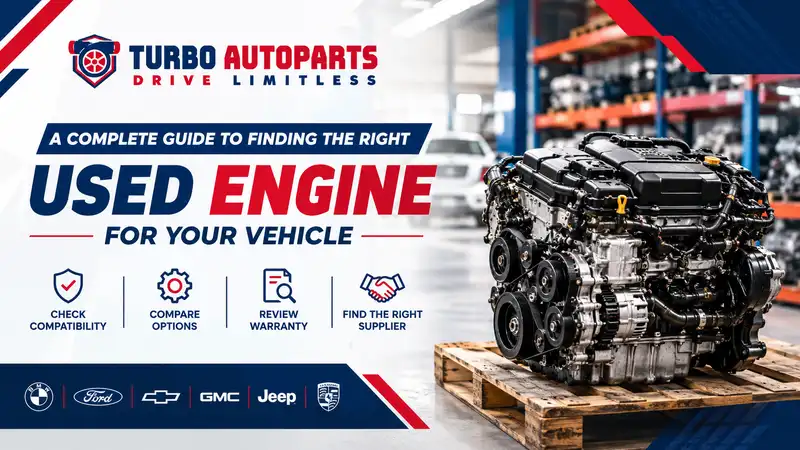
Finding the right replacement engine can help you restore your vehicle without the expense of purchasing another car. However, choosing an engine involves more than searching for a low price. You need to confirm compatibility, understand the engine's condition, compare replacement options, and select a supplier that provides reliable support.
When searching for used engines for sale, drivers can encounter many choices across vehicle makes, models, years, and engine configurations. A BMW sedan, Ford pickup, Chevrolet compact car, and Porsche sports car each have different requirements. Even vehicles carrying the same model name may use different engines depending on the production year and trim.
This guide explains how to choose a suitable used engine, evaluate common vehicle-specific applications, and understand what to check before ordering. It also explains how Turbo Auto Parts can help buyers search for replacement engines with fitment support and warranty coverage.
What Makes One Used Engine Different From Another?
Two engines may share a similar displacement but differ in design, electronics, fuel delivery, mounting points, and vehicle compatibility. For this reason, engine selection should begin with the vehicle's original specifications rather than price alone.
For example, a 2.0-liter turbocharged engine may have different components from another 2.0-liter engine designed for a different vehicle. Differences can include the engine control system, turbocharger configuration, emissions equipment, and transmission connections.
A suitable used engine for sale should match the vehicle's application as closely as possible. Buyers should compare the year, make, model, engine size, VIN information, and relevant engine codes before placing an order.
The original engine code is especially useful when a manufacturer offered multiple configurations during the same model year. If you cannot identify the correct code, a supplier's fitment team or a qualified mechanic can help verify the application.
Which Vehicle Details Matter Most When Buying a Replacement Engine?
Vehicle identification is one of the most important steps in the buying process. Start by checking the VIN, which can help identify the vehicle's original configuration. You should also review the engine label, owner's manual, existing engine code, and service records when available.
The model year matters because manufacturers can change engine designs between production years. Trim level and drivetrain can also affect compatibility. For instance, a rear-wheel-drive configuration may not use exactly the same engine setup as an all-wheel-drive version.
Before ordering, ask the supplier to confirm whether the listed engine fits your specific vehicle. Check whether the listing includes the required accessories or only the engine assembly. This distinction matters because components such as alternators, intake manifolds, sensors, and wiring may need to be transferred from your original engine.
Confirming these details early can help prevent incorrect orders, installation delays, and avoidable return costs.
Why Doesn't Engine Size Alone Guarantee Compatibility?
Engine displacement describes the approximate combined volume of an engine's cylinders. It does not establish that two engines are interchangeable.
A 3.6-liter V6, for example, can have different engine codes, electronic systems, and mounting configurations across vehicle applications. Similarly, a 1.4-liter turbocharged engine may require specific sensors, emissions components, and control-module compatibility.
Consider a 2018 Chevrolet Cruze 1.4L turbocharged engine. Buyers should verify the exact application and engine specifications rather than relying only on the 1.4-liter designation. The same principle applies to a 2012 Chevrolet Malibu engine, where the correct configuration must be confirmed for the vehicle's original powertrain.
The safest approach is to compare the original engine specifications with the replacement listing and obtain confirmation before purchase. If the replacement requires modifications, ask a qualified mechanic to evaluate the work and associated costs first.
What Should You Know About Different Makes and Models?
Engine requirements vary considerably between compact cars, luxury sedans, trucks, SUVs, and performance vehicles. Understanding the vehicle's intended use helps you evaluate the right replacement without assuming that every engine within a model family is identical.
How Do You Choose a Used BMW Engine?
BMW vehicles can use different engine families across model years and trims. A buyer searching for a used BMW 528i engine should confirm the year, displacement, engine code, and drivetrain before selecting a replacement. A listing for a 2015 BMW 528i, for example, should be checked against the vehicle's exact configuration.
The same attention is important when shopping for a BMW 550i engine. Buyers comparing 2011 BMW 550i engines or other model years should verify the engine generation and related electronic requirements. A BMW 550i and a BMW 528i are different applications, so the model badge alone cannot establish interchangeability.
For higher-performance BMW vehicles, including models with turbocharged engines, checking the engine code and required supporting components is particularly important. Review the condition report and warranty terms before choosing an assembly.
What Should You Check When Buying a Ford Engine?
Ford vehicles cover a wide range of applications, from passenger cars to heavy-duty work trucks. A replacement engine for a 2004 Ford Mustang 3.9L must match the appropriate engine configuration and vehicle requirements. Buyers should verify the VIN-related information and engine details rather than assuming that another Mustang engine will fit.
The requirements for a Ford F-550 Super Duty engine are different because heavy-duty trucks may serve demanding commercial purposes. Before ordering, verify the truck's model year, engine option, fuel type, and drivetrain. Also consider how the vehicle is used, since towing and commercial work can place different demands on a replacement engine.
For a 2009 Ford Ranger engine, check the exact original configuration and compare it with the supplier's fitment information. A correct match can simplify installation and help avoid problems caused by differences in engine design or electronics.
How Do You Select the Right Chevrolet or GMC Engine?
Chevrolet and GMC offer cars, SUVs, and trucks with a variety of powertrain configurations. When looking for a used Chevrolet Malibu engine, confirm the model year and original engine specifications. The same process applies to a Chevrolet Cruze 1.4L turbo engine, where the turbocharged configuration and related components deserve particular attention.
SUV buyers should also check the exact application before purchasing a Chevrolet Tahoe engine. Engine options can vary across model years and trims, so the correct listing should match the vehicle's original specifications.
For a 2012 GMC Acadia 3.6L V6 engine, confirm the engine code and compatibility with the vehicle's electronics and supporting systems. Although displacement provides a useful starting point, it should not replace a full fitment check.
What Matters When Buying a Jeep or Porsche Engine?
A 2006 Jeep Liberty 2.8L diesel engine requires a different verification process from a gasoline engine. Buyers should confirm the diesel configuration, engine code, fuel-system requirements, and vehicle-specific connections. They should also review the engine's condition and determine whether any original accessories must be reused.
Porsche applications call for equally careful identification. Someone searching for a used Porsche 911 engine should establish the exact model generation, production year, engine specification, and relevant configuration before comparing listings. The 911 name covers multiple generations and powertrain designs, so a broad model-level search is not enough to confirm fitment.
These examples show why a vehicle-specific search is more reliable than choosing an engine based only on brand, displacement, or advertised price.
Should You Buy a Used, Rebuilt, or Remanufactured Engine?
The best replacement option depends on your budget, vehicle condition, expected ownership period, and the engine's availability.
A used engine is typically an existing engine removed from another vehicle. Depending on the supplier, it may undergo inspection or testing before sale. This option can be practical when the buyer wants an original-style replacement and a suitable unit is available.
A rebuilt engine has generally been disassembled and repaired, with selected components replaced or reconditioned. The amount of work can vary, so buyers should ask what was replaced and which parts were reused.
A remanufactured engine usually undergoes a more extensive process intended to restore it to defined specifications. However, the exact process and standards depend on the remanufacturer.
Do not compare these options by price alone. Review the included components, documented work, warranty coverage, shipping charges, and installation requirements. A higher-priced option is not automatically better for every vehicle, and a lower-priced used engine is not automatically a poor choice.
How Can You Evaluate Used Engine Mileage and Condition?
Mileage provides useful context, but it does not tell the entire story. An engine with relatively low mileage may still have suffered from poor maintenance, overheating, contaminated oil, or long periods without proper servicing. A higher-mileage engine may have been maintained consistently, although its remaining service life still requires careful evaluation.
Ask the seller what information is available about the engine's origin, mileage, inspection, and testing. Find out whether the engine was checked for leaks, abnormal noise, visible damage, or other known issues. If the supplier provides a test report or condition documentation, review it before buying.
It is also important to understand what the warranty covers. A parts warranty may cover an eligible replacement engine component but exclude labor, installation errors, routine maintenance, or damage caused by other vehicle systems. Read the written terms rather than relying on a general statement that the engine is guaranteed.
Where practical, have a qualified mechanic inspect the replacement and evaluate the vehicle's cooling system, lubrication system, and related components before installation.
What Costs Should You Consider Beyond the Engine Price?
The advertised engine price is only one part of the replacement budget. Installation labor, fluids, filters, seals, shipping, and any required supporting components can increase the final cost. Additional work may be necessary if the original engine failure damaged other parts of the vehicle.
Before ordering, ask whether the listing includes the accessories shown in its photographs or only the engine assembly. Clarify shipping arrangements, delivery expectations, return requirements, and any applicable fees. Confirm whether the supplier ships to a residential address, a commercial location, or a repair shop.
You should also ask your installer to assess related systems. An engine failure caused by overheating, for example, may indicate a cooling-system problem that needs attention. Installing a replacement without addressing the underlying issue can put the new engine at risk.
Requesting a complete estimate before purchase makes it easier to compare suppliers fairly and plan the repair.
What Makes a Used Engine Supplier Trustworthy?
A reliable supplier should provide clear product information, explain fitment requirements, communicate warranty terms, and answer questions about the engine's condition. The company should also explain the ordering and shipping process before you commit to a purchase.
Look for a supplier that can help verify the engine against your vehicle's specifications. Ask what happens if the delivered engine does not match the confirmed application and what documentation is required for warranty or return claims.
Be cautious of listings that lack meaningful specifications or make broad promises without written terms. A professional buying experience should make the important details easy to understand, including what is included, what is excluded, and what the buyer needs to do before installation.
Comparing these factors can help you make a more informed decision than choosing the first low-priced listing in search results.
Why Choose Turbo Auto Parts for Used Engines for Sale?
Turbo Auto Parts helps customers across the United States search for used engines and transmissions for a range of vehicle applications. Its inventory-focused approach allows buyers to explore replacement options by make, model, year, and engine configuration.
Customers can use fitment support to help identify an engine that matches their vehicle. Before placing an order, provide accurate vehicle details and ask the team to confirm the application. This is particularly useful when a model has multiple engine options or when you are searching for a specific year and displacement.
Turbo Auto Parts offers a 3-year/30,000-mile parts warranty, subject to the applicable warranty terms. Buyers should review the written coverage to understand eligible parts, exclusions, and claim requirements. The company also offers free shipping to commercial addresses in the United States, according to its applicable shipping terms.
If you are comparing used engines for a BMW, Ford, Chevrolet, GMC, Jeep, or Porsche, start with the exact vehicle specifications rather than a broad model name. Then review the available engine details, warranty, shipping arrangements, and total replacement cost before making a decision.
Visit Turbo Auto Parts to explore used engine options and request fitment assistance for your vehicle.
How Can You Avoid Common Engine-Buying Mistakes?
The most effective way to reduce buying risks is to verify compatibility before paying. Do not assume that an engine fits simply because the year, displacement, or model name looks similar. Confirm the VIN-related details, engine code, drivetrain, and any relevant configuration differences with the supplier.
Next, review the condition information and warranty in writing. Ask what is included with the engine and whether additional parts or installation work will be necessary. Compare the total expected cost, not just the initial listing price.
Finally, have a qualified installer inspect the vehicle and identify the cause of the original engine failure. Correcting related problems before installation can help protect the replacement and reduce the risk of another costly repair.
Frequently Asked Questions
Where can I find used engines for sale in the USA?
You can search online suppliers that list engines by make, model, year, and engine configuration. Compare compatibility information, condition details, warranty coverage, shipping terms, and customer support before ordering. Turbo Auto Parts offers used engine options and fitment assistance for customers across the United States.
How do I know whether a used engine will fit my car?
Check the VIN, model year, engine code, displacement, and drivetrain. Compare these details with the replacement engine listing and ask the supplier to confirm compatibility. Do not rely on displacement alone because engines with the same size can have different configurations.
Is buying a used engine worth it?
A used engine may be a practical choice when the vehicle is otherwise in good condition and a compatible replacement is available at a suitable total cost. Compare the engine price, installation, supporting repairs, condition information, and warranty before deciding whether replacement makes financial sense.
What warranty should I look for when buying a used engine?
Review the duration, mileage limit, covered parts, exclusions, claim process, and installation requirements. Confirm whether labor and related components are excluded. Turbo Auto Parts offers a 3-year/30,000-mile parts warranty, subject to its written terms and conditions.
Does engine mileage determine its remaining life?
Mileage is one factor, but maintenance history, overheating, lubrication, operating conditions, and inspection results also matter. Ask the supplier for available condition information and have a qualified mechanic assess the engine and related systems before installation.
Should I replace my engine or buy another vehicle?
Compare the complete engine replacement cost with your vehicle's current value, overall condition, expected future repairs, and how long you plan to keep it. If the transmission, body, and other major systems remain in good condition, an engine replacement may be worth considering. A mechanic can help estimate the likely repair costs.
Choose the Right Engine Before You Order
A successful engine replacement begins with accurate vehicle identification, careful condition checks, and a clear understanding of the total cost. Whether you are searching for a BMW 550i engine, a Ford Ranger replacement, a Chevrolet Cruze turbo engine, or another application, confirm the exact specifications before choosing a supplier.
Explore used engines for sale at Turbo Auto Parts and request fitment assistance to help identify a suitable replacement for your vehicle. Check the available engine details, shipping terms, and warranty conditions before placing your order.