



Find the Right Replacement Engine by Engine Codes
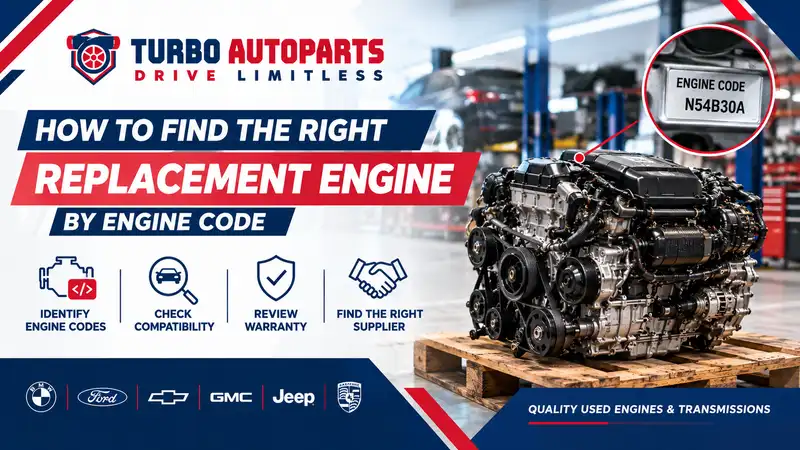
Finding the correct replacement engine can be challenging, especially when a vehicle has multiple engine options across different model years. Two cars with the same make and model may use different engines, even when their displacement figures look identical. This is why checking the engine code can make a significant difference when searching for a replacement.
For drivers looking for a used engine for sale in the United States, understanding engine identification can help prevent compatibility problems, unnecessary shipping costs, and installation delays. An engine code provides valuable information about the engine's design and application, helping buyers narrow their options before placing an order.
This guide explains what engine codes mean, where to find them, how they differ from VIN information, and how to use them when comparing replacement engines.
What Is an Engine Code, and Why Does It Matter?
An engine code is an identification code used to distinguish a particular engine design or configuration. Depending on the manufacturer, it may identify an engine family, displacement, fuel type, generation, or other technical characteristics. The exact information represented by the code varies between automakers.
For example, BMW uses engine designations such as N54 and N55 to identify different engine families. Although both are associated with turbocharged inline-six gasoline engines, they are not automatically interchangeable. Their engineering differences, supporting components, electronics, and vehicle applications must be considered before choosing a replacement.
Engine codes are particularly useful when manufacturers offer several engines for the same vehicle. A model may have naturally aspirated and turbocharged versions, different cylinder configurations, or changes introduced during a production update.
When searching for replacement inventory, an engine code gives you a more precise starting point than a broad description such as a 2.0-liter engine. However, the code should always be checked alongside the vehicle's year, make, model, drivetrain, and other compatibility requirements.
Where Can You Find Your Vehicle's Engine Code?
The engine code may appear in several locations, depending on the vehicle manufacturer and model year. One common location is a label or marking on the engine itself. Some manufacturers place identification information on the engine block, cylinder head, or another accessible component.
You may also find engine information in the owner's manual, original vehicle documentation, maintenance records, or manufacturer-specific service information. Certain vehicles display engine-related details on emissions labels in the engine compartment, although these labels do not always provide the complete engine code needed for ordering a replacement.
Your VIN can help identify the original engine configuration, but it is not the same as the engine code. The VIN identifies the vehicle, while the engine code identifies an engine design or configuration. If an engine was replaced previously, the vehicle's original VIN-related configuration might not match the engine currently installed.
When the physical code is difficult to locate, ask a qualified mechanic or parts specialist to help identify it. Providing clear photographs of existing labels and markings can also help a supplier verify the correct application.
How Is an Engine Code Different From a VIN?
The Vehicle Identification Number, commonly called the VIN, is a unique identifier assigned to an individual vehicle. In the United States, a standard modern VIN contains 17 characters that encode information about the vehicle's manufacturer, attributes, model year, assembly details, and identifying sequence.
An engine code serves a different purpose. It identifies an engine family or particular configuration, depending on the manufacturer's coding system. Multiple vehicles may share an engine code, while vehicles from the same model year may use different engine configurations.
Both identifiers are useful when selecting a replacement engine. The VIN helps establish the vehicle's original specifications, while the engine code helps narrow down the actual engine design.
For the most accurate match, provide both identifiers whenever possible. If the vehicle has undergone a previous engine swap, tell the supplier about that change because the current engine's code may be more relevant than the original factory configuration alone.
Can Two Engines With the Same Displacement Be Interchanged?
No. Matching displacement does not guarantee that two engines will fit the same vehicle or operate correctly with its existing systems.
Displacement describes the combined volume swept by an engine's pistons. It does not establish that the engines share identical mounting points, cylinder-head designs, fuel systems, wiring connections, sensors, control modules, or emissions equipment.
Consider a 2.0-liter turbocharged engine used in a passenger car. Another manufacturer's 2.0-liter turbocharged engine may have a different block design, turbocharger arrangement, transmission interface, and electronic management system. Even engines from the same manufacturer can differ between generations.
These differences also matter when selecting a replacement for a specific model. A buyer searching for a 2018 Chevrolet Cruze 1.4L turbocharged engine should verify the exact engine application and related equipment rather than relying on displacement alone.
The same principle applies to Ford trucks, BMW sedans, Jeep SUVs, and other vehicles with multiple powertrain options. Always confirm the full application before ordering.
How Do Engine Codes Help With BMW, Ford, and Chevrolet Applications?
Engine identification becomes especially important when shopping for vehicles with several engine generations or configurations.
BMW is a useful example because engine families such as the N54 and N55 have different technical characteristics despite sharing a broad layout. Someone looking for a BMW 335i replacement should verify the production year, original engine family, drivetrain, and relevant hardware. The model badge alone may not provide enough information to establish compatibility.
Ford applications require the same attention. A Ford F-550 Super Duty used for commercial work may have different engine options depending on the model year and configuration. Buyers should verify the engine family, fuel type, and vehicle-specific requirements before choosing a replacement. A code-based search can narrow the choices, but the supplier should still confirm the complete fitment.
Chevrolet vehicles also illustrate why precise identification matters. A Chevrolet Cruze with a 1.4-liter turbocharged engine has different requirements from a vehicle using another engine option. Buyers should check the production year, engine code, and required supporting components before ordering.
Across all three manufacturers, the goal is to establish an exact match rather than assume that an engine will fit because its brand, displacement, or model designation appears similar.
What Should You Check After Identifying the Correct Engine Code?
Finding a matching code is an important step, but it should not be the final purchasing decision. You also need to evaluate the replacement engine's condition, included components, documented testing, warranty coverage, and shipping arrangements.
Ask the supplier what is known about the engine's mileage and history. If inspection or testing information is available, review it to understand the engine's reported condition. Find out whether the listing includes accessories such as the intake manifold, alternator, sensors, or other components, because inventory can differ between sellers.
You should also check whether the replacement requires transferring components from the original engine. Differences in wiring, intake systems, emissions equipment, or accessories may affect installation even when the main engine assembly is suitable.
Finally, have a qualified installer review the application before installation. The mechanic can confirm whether the replacement matches the vehicle and identify related problems that may have contributed to the original engine failure.
How Can You Avoid Ordering the Wrong Replacement Engine?
The most reliable approach is to gather the vehicle's identifying details before searching. Record the model year, make, model, engine size, VIN, and engine code when available. If the engine has been replaced previously, document that information as well.
Use these details when reviewing listings, and ask the supplier to verify the application rather than relying on a general compatibility statement. If two listings appear similar, compare their engine codes, configuration details, and included components before choosing between them.
Review the written return policy and warranty conditions before purchasing. Understand what happens if a fitment issue occurs and which documents may be required to resolve it. These checks are particularly important for engines shipped across the country, where returning an incorrect assembly can create additional delays and expenses.
A little preparation before ordering can help reduce avoidable costs and make the replacement process more predictable.
What Role Does Warranty Play When Buying a Used Engine?
A warranty provides defined coverage for eligible problems under specific conditions, but the terms vary by supplier. Buyers should check the coverage period, mileage limit, covered components, exclusions, and claim process before making a purchase.
It is also important to understand the distinction between parts coverage and labor coverage. A parts warranty may cover an eligible engine component without paying for mechanic labor, towing, diagnostic work, fluids, or related repairs. Installation requirements may also apply.
Turbo Auto Parts offers a 3-year/30,000-mile parts warranty, subject to the applicable written terms and conditions. Customers should review the actual warranty documentation to understand eligibility, exclusions, and responsibilities before ordering.
A suitable warranty should complement proper engine identification and inspection. It cannot make an incompatible engine fit, so confirm compatibility before purchase and follow the supplier's installation requirements.
Where Can You Find a Compatible Used Engine for Your Vehicle?
Once you have identified the engine code and confirmed your vehicle's specifications, you can compare listings from suppliers that provide detailed application information and fitment assistance.
Look for listings that identify the engine's intended vehicle applications and provide useful technical details. Ask questions when information is incomplete, especially if your vehicle has multiple engine options or a history of previous repairs.
Turbo Auto Parts helps customers across the United States explore used engines and transmissions for a range of vehicle applications. Buyers can provide their vehicle information and request assistance verifying the appropriate engine. The company also offers free shipping to commercial addresses in the United States, subject to applicable shipping terms.
Before placing an order, compare the total cost, condition information, included components, warranty, and delivery arrangements. This gives you a more complete basis for deciding whether a particular engine meets your requirements.
Frequently Asked Questions
Can I find my engine code using my VIN?
Your VIN can help identify your vehicle's original engine configuration, but it does not always display the complete engine code directly. A manufacturer-specific VIN decoder, service database, engine label, or mechanic may help establish the correct engine family. If the engine has been replaced, verify the code on the installed engine as well.
Does a matching engine code guarantee compatibility?
A matching engine code is a strong starting point, but you should still confirm the model year, drivetrain, transmission interface, electronics, and required accessories. Manufacturers may introduce application-specific differences or revisions. Ask the supplier to verify the complete vehicle fitment before purchasing and have a qualified installer review the replacement.
Where is the engine code located on a car?
The location depends on the manufacturer and vehicle. It may be stamped on the engine block or displayed on a label attached to an engine component. The owner's manual, service documentation, or manufacturer-specific repair information may help locate it. A mechanic can assist if the marking is difficult to access or read.
Is engine displacement enough to order a replacement engine?
No. Displacement identifies the approximate cylinder volume but does not confirm that an engine has the correct mounting points, electronics, fuel system, or other components. Two engines with identical displacement may serve different applications. Always compare the engine code and vehicle specifications, then obtain fitment confirmation before ordering.
What information should I give a supplier before buying a used engine?
Provide the vehicle's year, make, model, VIN, engine size, and engine code if available. Explain whether the engine has been replaced previously and share any relevant configuration details. These details help the supplier narrow the options and verify compatibility, reducing the likelihood of ordering an unsuitable engine.
Does a warranty cover engine installation labor?
Not necessarily. A parts warranty may cover specified engine components while excluding labor, towing, fluids, diagnostic services, or damage caused by other vehicle systems. Coverage varies by supplier, so read the written terms carefully. Confirm installation requirements and claim procedures before purchasing or arranging the replacement.
Final Thoughts
Engine codes help turn a broad replacement search into a more precise process. When combined with the VIN, model year, drivetrain, and vehicle-specific requirements, they can help identify suitable engine options and reduce the risk of costly compatibility mistakes.
Before buying, verify the engine application, review available condition information, compare the complete replacement cost, and understand the warranty terms.
If you are searching for a used engine for sale, visit Turbo Auto Parts to explore available options and request fitment assistance for your vehicle. Confirm the exact application before placing your order.