



Used BMW Engine for Sale: 335i, 550i, N54, N55 and Used BMW Engine Buying Guide
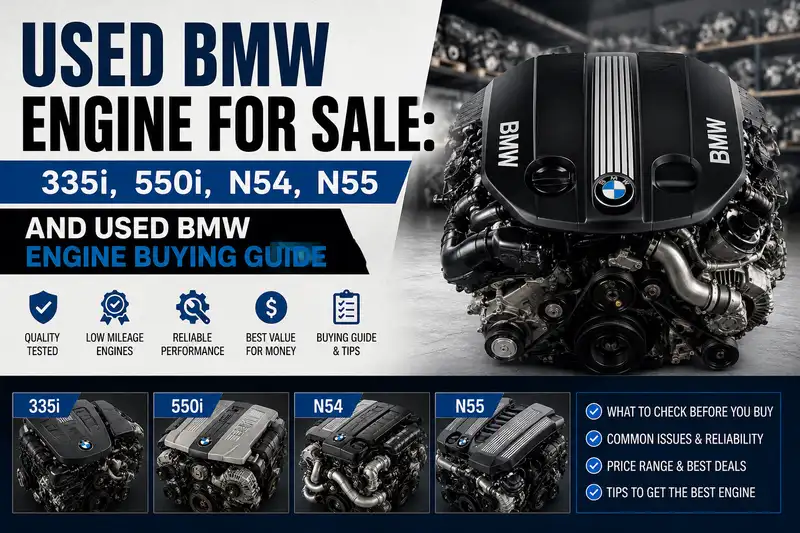
Finding the right BMW engine can be surprisingly complicated because the same model name can use different engines depending on the year and market. This becomes obvious when looking at searches for “2008 BMW 335i engine for sale,” “2011 BMW 335i engine for sale,” “BMW N54 for sale,” “used N54 engine for sale,” and “2011 BMW 335i N55 engine for sale.”
These keywords represent genuine differences between BMW powertrains rather than simple variations of the same search.
The BMW 335i became especially famous because of its turbocharged inline-six engines. The N54 and N55 both became popular among enthusiasts, but their design and application are not identical.
Why BMW 335i Engine Identification Matters
If a BMW needs an engine replacement, ordering based only on the vehicle badge can be risky.
A 335i from one production period may use a different engine than another. The N54 and N55 are the best-known examples.
The N54 uses twin turbochargers and became famous for its tuning potential. The later N55 uses a single twin-scroll turbocharger and introduced several changes intended to improve efficiency, drivability, and engine design.
For someone looking for a used engine for sale, confirming the engine family before buying is essential.
BMW N54 Engine for Sale
The N54 is a 3.0-liter turbocharged inline-six that became highly regarded among BMW engine enthusiasts.
It was used in several BMW applications, including the 335i. The engine became particularly popular because of its aftermarket support and tuning potential.
However, buying an N54 today requires attention to age. Many available engines have already accumulated significant mileage.
A used N54 engine should therefore be evaluated for its condition rather than simply selected because it has a lower advertised price.
BMW N55 Engine for Sale
The N55 followed the N54 and introduced a different turbocharging arrangement. It remained a 3.0-liter turbocharged inline-six but used a single twin-scroll turbocharger.
The N55 appeared in several BMW models, so compatibility still depends on the specific application.
This is why a search such as “2011 BMW 335i N55 engine for sale” is more useful than simply searching for “BMW 335i engine.”
The exact year and vehicle configuration should always be matched with the engine listing.
What Makes a Used BMW Engine Worth Buying?
The most useful information is not always the lowest price.
When buying a used BMW engine, I would want to know the mileage, donor vehicle, engine code, testing process, and warranty coverage.
It is also useful to know whether the engine was removed from a running vehicle or from a vehicle damaged in an accident.
A collision-damaged donor vehicle can sometimes provide a good engine because the vehicle itself was damaged without necessarily damaging the powertrain.
BMW 328i and Other Inline-Six Searches
Searches such as “328i engine for sale,” “BMW inline 6 engine for sale,” “2008 BMW 325i engine,” and “2016 BMW 328i engine for sale” show that buyers are searching across multiple BMW generations.
This creates an important SEO and purchasing lesson: BMW engine searches should be organized by model, year, and engine family.
A 328i engine cannot automatically be treated as interchangeable with a 335i engine simply because both vehicles carry similar model numbers.
The engine code remains the more reliable identifier.
BMW 550i and V8 Replacement Engines
The 550i represents another important BMW engine category. Searches for “2011 BMW 550i engine for sale,” “2012 BMW 550i engine for sale,” and “2013 BMW 550i engine for sale” indicate demand for replacement V8 powerplants.
These engines should be researched separately from the 335i's inline-six engines because displacement, architecture, electronics, and fitment are different.
This is another reason a good used engine for sale page should explain exact compatibility rather than simply listing a generic BMW engine.
Is a Used BMW Engine Better Than Rebuilding?
The answer depends on the condition of the original engine and the cost of rebuilding.
A used engine can reduce labor time when a compatible tested replacement is readily available. Rebuilding can make more sense when the vehicle has sentimental value or when the original engine's configuration is difficult to replace.
The key is comparing the complete cost, including labor, parts, machine work, shipping, and warranty.
How to Avoid Buying the Wrong BMW Engine
The best approach is to verify the VIN and engine code before ordering.
The vehicle year alone is not enough for many BMW applications. Different production periods, markets, transmissions, emissions configurations, and electronics can affect compatibility.
A reputable supplier should be able to help confirm fitment before the purchase.
That extra verification can prevent the expensive mistake of receiving an engine that physically resembles the original but cannot be installed without major modifications.
Frequently Asked Questions
Is the BMW N54 engine reliable as a used replacement?
A properly inspected N54 can serve as a replacement engine, but condition varies considerably because these engines are now older. Buyers should verify mileage, maintenance history, compression, oil condition, turbo-related components, and warranty coverage before purchasing.
Is the N54 better than the N55?
Neither engine is universally better. The N54 is highly regarded for tuning potential and twin-turbo performance, while the N55 introduced a different turbocharging design and improved efficiency. The best choice depends on vehicle compatibility, intended use, condition, and budget.
What BMW models use the N54?
The N54 appeared in several BMW applications, including various 335i models. Exact compatibility depends on model year, chassis, market, and configuration. Buyers should match the engine code and vehicle identification information rather than assuming every N54 is directly interchangeable.
How do I find the right BMW 335i engine?
Start with the vehicle VIN, production year, chassis, and engine code. Then compare those details with the supplier's listing. This approach is safer than purchasing based only on the BMW 335i badge because different production periods can use different powertrains.
What should I check when buying a used BMW engine for sale?
Check the engine code, mileage, donor vehicle, testing information, damage history, included components, warranty, and fitment. Ask whether accessories are included because a long block and complete engine assembly can represent very different replacement costs.