



Top 10 Signs Your Transmission Is About to Fail
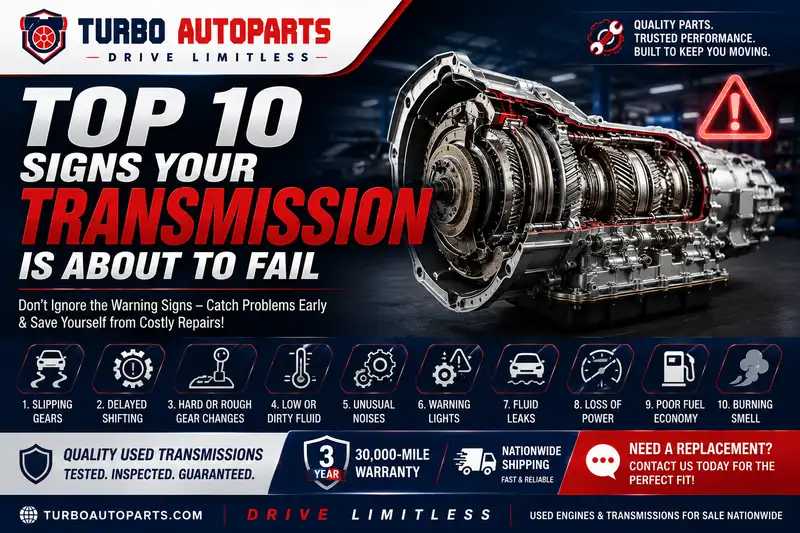
Your vehicle's transmission is responsible for transferring engine power to the wheels and keeping the vehicle moving at the correct speed. Whether your car uses an automatic, manual, CVT, or another transmission design, proper maintenance can make a major difference in its service life.
Transmission problems rarely appear without warning. Strange noises, delayed shifting, slipping, fluid leaks, and unusual vibrations can indicate developing problems. Recognizing these symptoms early may help prevent more expensive internal damage.
If the transmission has already suffered major damage, replacing the entire vehicle may not always be necessary. When the engine, chassis, suspension, electrical system, and body remain in good condition, a properly matched used transmission can be a practical repair option.
1. Delayed or Hesitant Shifting
One of the most noticeable transmission problems is a delay between selecting a gear and the vehicle responding.
For example, you may move the selector from Park to Drive and experience a noticeable pause before the vehicle begins moving.
Delayed engagement can result from low transmission fluid, hydraulic pressure problems, worn internal components, solenoid issues, or other mechanical faults.
Ignoring the problem may allow relatively minor issues to develop into more serious transmission damage.
2. Transmission Slipping
Transmission slipping occurs when the transmission fails to remain properly engaged in the selected gear.
You may notice the engine RPM suddenly increasing without a corresponding increase in vehicle speed.
Slipping can occur because of worn clutch packs, low fluid, damaged internal components, or hydraulic problems.
In an automatic transmission, persistent slipping should be diagnosed quickly because continued operation can create additional friction and heat.
3. Hard or Jerky Shifting
A healthy transmission should generally change gears smoothly.
If your vehicle suddenly begins shifting aggressively, producing a noticeable jolt, there may be an underlying transmission problem.
Hard shifting can be associated with fluid problems, electronic controls, solenoids, pressure issues, worn mounts, or internal transmission components.
A diagnostic scan and professional inspection can help determine whether the problem is electronic, hydraulic, or mechanical.
4. Unusual Transmission Noises
New sounds coming from the transmission should never be ignored.
Depending on the transmission type, worn bearings, gears, shafts, pumps, or other internal components can produce whining, humming, grinding, rattling, or clunking sounds.
The sound's timing can provide useful information. For example, a noise that changes with vehicle speed may indicate a drivetrain-related issue rather than an engine problem.
Early diagnosis can sometimes prevent a minor problem from becoming a complete transmission failure.
5. Transmission Fluid Leaks
Transmission fluid leaks are another important warning sign.
Unlike engine oil, transmission fluid is specifically designed to lubricate and control transmission components. A low fluid level can increase friction, heat, and internal wear.
Look for fluid underneath the vehicle, particularly after it has been parked for several hours.
The fluid's color and condition can also provide clues, although appearance alone is not enough to diagnose a transmission problem.
6. Burning Smell
A burning odor can indicate excessive transmission heat or overheated fluid.
Transmission fluid helps lubricate internal components and transfer hydraulic pressure. When the fluid becomes overheated or severely degraded, its ability to protect the transmission can decrease.
Heavy towing, stop-and-go traffic, low fluid levels, and internal mechanical problems can contribute to excessive transmission temperature.
If you notice a persistent burning smell, have the vehicle inspected rather than continuing to drive it normally.
7. Vehicle Won't Move
A vehicle that starts normally but does not move when Drive or Reverse is selected may have a serious transmission problem.
Possible causes include low fluid, broken drivetrain components, hydraulic failure, electronic faults, or severe internal transmission damage.
Before assuming the transmission itself has failed, a technician should inspect related systems and verify the actual cause.
If internal damage is confirmed, replacing the transmission may become more economical than attempting extensive repairs.
8. Gear Won't Engage
A transmission that refuses to engage a particular gear can indicate an internal or electronic problem.
For example, the vehicle may move in Drive but fail to operate correctly in Reverse.
Possible causes include damaged solenoids, valve-body problems, worn clutches, electronic faults, or mechanical damage.
Because modern transmissions use complex electronic controls, diagnostic equipment is often necessary to identify the source of the problem accurately.
9. Transmission Warning Light
Modern vehicles use electronic control modules to monitor transmission operation.
If the system detects an abnormal condition, it may illuminate a transmission-related warning light or the vehicle's check-engine light.
A warning light does not automatically mean the transmission needs replacement. The stored diagnostic trouble codes should be retrieved and interpreted before making a repair decision.
Addressing the warning early can sometimes prevent more expensive damage.
10. Poor Acceleration or Reduced Performance
A failing transmission may prevent the engine's power from reaching the wheels efficiently.
The engine may sound normal, but the vehicle may accelerate slowly, hesitate between gears, or struggle to maintain speed.
Poor acceleration can have many causes, including engine problems, fuel-system issues, clogged filters, drivetrain problems, and transmission faults.
A complete diagnostic inspection is therefore important before purchasing a replacement transmission.
What Causes Transmission Failure?
Transmission failure can develop for many different reasons.
Common causes include:
- Low transmission fluid
- Incorrect fluid type
- Overheating
- Worn clutch components
- Damaged gears
- Solenoid failure
- Valve-body problems
- Bearing wear
- Electrical faults
- Poor maintenance
- Excessive towing
- High mileage
Driving habits also matter. Aggressive acceleration, repeated heavy towing, and ignoring warning signs can increase transmission stress.
How Transmission Fluid Protects the Transmission
Transmission fluid does much more than lubricate internal components.
Depending on the transmission design, fluid also helps transfer hydraulic pressure, operate clutch packs, cool components, and support electronic and hydraulic control systems.
Over time, fluid can degrade because of heat and friction.
Following the manufacturer's recommended maintenance schedule and using the correct fluid specification can help protect the transmission.
However, service requirements differ significantly between automatic, manual, CVT, and dual-clutch transmissions.
Can a Transmission Be Repaired Instead of Replaced?
Yes. Some transmission problems can be repaired without replacing the entire unit.
For example, a vehicle may have a faulty solenoid, leaking seal, damaged sensor, or other serviceable component.
However, severe internal damage may make replacement or rebuilding more practical.
The decision should be based on the actual failure, vehicle condition, labor costs, parts availability, and the cost of a replacement unit.
Used Transmission vs. Rebuilt Transmission
A used transmission is typically sourced from another vehicle and may provide a practical replacement when the original unit has suffered major failure.
A rebuilt or remanufactured transmission follows a different process, with internal components inspected and, depending on the product, worn components replaced or restored.
Neither option is automatically best for every vehicle.
Consider the vehicle's age, market value, expected ownership period, repair budget, warranty, and availability of the correct transmission.
How to Choose the Correct Replacement Transmission
Transmission compatibility is extremely important.
Before ordering, collect:
- VIN
- Vehicle year
- Make and model
- Engine size
- Transmission type
- Transmission code
- Drivetrain
- Number of gears
- Production date
Two vehicles with the same engine can use different transmissions.
For this reason, selecting a replacement based only on the vehicle's model is not enough.
Why Buy a Used Transmission from Turbo Auto Parts?
Turbo Auto Parts provides replacement transmission options for cars, trucks, and SUVs across the USA.
Customers can provide their vehicle's VIN, year, make, model, engine, and transmission information to help identify a suitable replacement.
Turbo Auto Parts focuses on inspected used powertrains, fitment assistance, warranty options, and nationwide shipping.
If your vehicle's engine and other major systems remain in good condition, a properly matched used transmission can be a practical alternative to replacing the entire vehicle.
Final Thoughts
Transmission failure often provides warning signs before complete failure occurs.
Delayed shifting, slipping, hard gear changes, unusual noises, fluid leaks, burning odors, and warning lights should all receive attention.
The earlier the underlying problem is diagnosed, the more repair options you may have.
If the transmission has already suffered severe internal damage, compare rebuilding the original unit with purchasing a properly matched replacement. Always verify the transmission code, VIN, drivetrain, and vehicle configuration before ordering.
A quality replacement transmission can help restore dependable performance and extend the useful life of a vehicle that remains mechanically sound.
Frequently Asked Questions
1. What are the first signs of transmission failure?
Common early warning signs include delayed shifting, slipping, hard gear changes, unusual noises, fluid leaks, and hesitation when accelerating. Some vehicles may also display a check-engine or transmission warning light. Getting these symptoms diagnosed early can help determine whether the issue is repairable.
2. Can you drive a car with a failing transmission?
It depends on the severity of the problem. Minor symptoms may allow limited driving, but continued operation with slipping, overheating, severe noises, or low fluid can increase internal damage. If the vehicle suddenly loses movement or produces severe mechanical noises, professional inspection should be prioritized.
3. How do I know if my transmission needs to be replaced?
A transmission may need replacement when it has severe internal damage, repeated slipping, extensive gear failure, or other problems that make rebuilding uneconomical. However, symptoms alone cannot confirm replacement is necessary. A professional diagnosis should identify the actual failure before purchasing another transmission.
4. How long does a used transmission last?
The lifespan of a used transmission depends on its mileage, condition, maintenance history, vehicle application, driving habits, and installation quality. A properly inspected replacement can provide substantial additional service, but there is no universal mileage guarantee for every used transmission.
5. Is buying a used transmission worth it?
A used transmission can be worthwhile when the replacement cost is lower than rebuilding or replacing the vehicle. It is particularly useful when the engine, chassis, suspension, electrical system, and body remain in good condition. Always compare mileage, condition, warranty, compatibility, and installation costs.
6. What causes an automatic transmission to fail?
Common causes include overheating, low or incorrect fluid, worn clutch packs, damaged gears, failed solenoids, valve-body problems, bearing wear, and electronic faults. Heavy towing and neglected maintenance can also increase transmission stress. Regular service can help reduce avoidable transmission problems.
7. Can low transmission fluid cause shifting problems?
Yes. Low fluid can reduce hydraulic pressure and lubrication, potentially causing delayed engagement, slipping, harsh shifts, overheating, and accelerated internal wear. However, adding fluid alone may not solve the underlying problem because low fluid can indicate a leak or existing transmission damage.
8. What does transmission slipping feel like?
Transmission slipping can feel like the engine suddenly increases RPM while the vehicle fails to accelerate proportionally. You may also experience hesitation, unexpected gear changes, or difficulty maintaining speed. Persistent slipping should be diagnosed quickly because continued operation can generate excessive heat and internal wear.
9. How do I choose a used transmission?
Use the vehicle VIN, year, make, model, engine, transmission code, drivetrain, and production information. Verify the replacement unit's mileage, donor vehicle, inspection information, included components, and warranty. Do not select a transmission based solely on the vehicle model or number of gears.
10. Where can I buy a used transmission?
Choose a supplier that provides accurate identification, fitment assistance, inspection information, mileage details, and clear warranty terms. Turbo Auto Parts offers used transmission options for many cars, trucks, and SUVs and helps customers identify replacement units based on their vehicle-specific information.