



Kia Optima Engine Failure Warning Signs: Symptoms, Causes & Prevention Guide
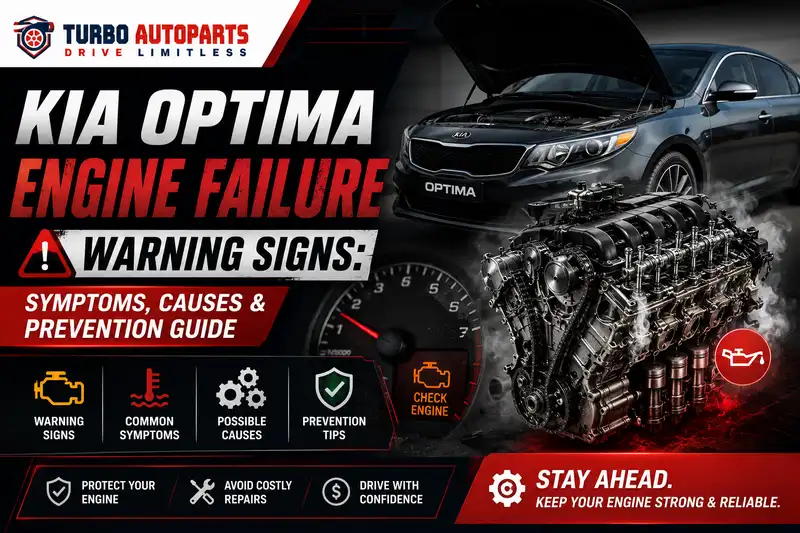
A reliable engine is the foundation of every dependable vehicle, and the Kia Optima has earned a strong reputation for offering comfort, efficiency, and value. Over the years, Kia equipped the Optima with several engines, including the 2.4L Theta II GDI, 2.0L Turbo Theta II, 1.6L Turbo GDI, and the newer 2.5L Smartstream GDI. While many owners enjoy years of trouble-free driving, some model years have experienced well-documented engine issues. Recognizing Kia Optima engine failure warning signs early can prevent unexpected breakdowns and expensive repairs. Whether you own a 2011 Kia Optima, 2013 Kia Optima, 2015 Kia Optima, 2018 Kia Optima, or a newer model, understanding how the engine communicates developing problems allows you to make informed maintenance decisions before serious damage occurs.
Early Engine Failure Symptoms Every Kia Optima Owner Should Recognize
Engine failure rarely happens without warning. In most cases, the vehicle provides several noticeable signs long before major mechanical damage develops. One of the first symptoms is an illuminated Check Engine Light, which often appears alongside rough idling, hesitation during acceleration, or reduced fuel efficiency. Many drivers initially ignore these minor changes because the vehicle still drives normally. However, these symptoms frequently indicate developing ignition, fuel delivery, or internal engine problems.
Another common warning sign is increased engine vibration, especially while idling at traffic lights or accelerating from a stop. Drivers may also notice delayed throttle response or reduced engine power when merging onto highways. These symptoms can result from worn spark plugs, failing ignition coils, clogged fuel injectors, or declining engine compression. Diagnosing these issues early prevents additional wear and often eliminates the need for major repairs. Owners searching for Kia Optima engine problems, used Kia Optima engine, or engine replacement should always begin with a complete diagnostic inspection before assuming the engine requires replacement.
Knocking Noises, Oil Consumption, and Low Oil Pressure Should Never Be Ignored
One of the most serious Kia Optima engine failure symptoms is a metallic knocking sound coming from the lower portion of the engine. This noise often indicates connecting rod bearing wear, particularly in some 2.4L Theta II GDI engines. As bearing clearance increases, the knocking becomes louder during acceleration and higher engine speeds. Continuing to drive under these conditions can result in complete engine seizure.
Excessive oil consumption is another warning sign that deserves immediate attention. If the engine requires frequent oil top-offs between scheduled services, worn piston rings or internal engine wear may be allowing oil to enter the combustion chamber. Drivers may also notice blue smoke from the exhaust or a burning oil smell after long drives. Low oil pressure warning lights should never be ignored because inadequate lubrication accelerates wear on crankshaft bearings, camshafts, and turbocharger components. Regular oil level inspections remain one of the simplest ways to extend engine life.
Overheating Can Lead to Permanent Engine Damage
The cooling system plays a critical role in protecting every Kia Optima engine. Components such as the radiator, thermostat, water pump, cooling fans, and coolant hoses work together to maintain proper operating temperatures. When one of these components fails, engine temperatures rise rapidly, increasing the risk of permanent damage.
Drivers often notice the temperature gauge climbing higher than normal, coolant leaking beneath the vehicle, or steam escaping from the engine compartment. Some vehicles may also produce poor cabin heater performance because of low coolant levels. Repeated overheating can warp the cylinder head, damage the head gasket, and reduce engine compression. In severe cases, the engine block itself may crack, making replacement more economical than rebuilding. Routine coolant inspections and scheduled cooling system maintenance help prevent these costly failures.
Understanding the Theta II Engine Recall and Its Impact
The Theta II engine has received significant attention because of several recall campaigns involving certain Kia and Hyundai vehicles. Manufacturing debris left inside the engine during production could restrict oil flow to connecting rod bearings, causing premature wear and increasing the risk of engine failure. Although not every Kia Optima was affected, many 2011–2019 Kia Optima models equipped with the 2.4L GDI and 2.0L Turbo engines were included in recall programs or warranty extensions.
Owners should verify their Vehicle Identification Number (VIN) to determine whether recall repairs have already been completed. Kia also introduced software updates, including the Knock Sensor Detection System (KSDS), to identify abnormal engine bearing wear before catastrophic failure occurs. Even if your vehicle qualifies for recall repairs, regular maintenance remains essential because normal wear continues as mileage increases.
When Should You Repair the Engine Instead of Replacing It?
Not every engine problem requires complete replacement. Many Kia Optima owners successfully resolve issues by replacing ignition coils, spark plugs, fuel injectors, sensors, water pumps, or leaking gaskets. If diagnostic testing confirms healthy compression and no major internal damage, repairing individual components often restores normal engine performance.
However, engine replacement becomes the better option when technicians discover severe connecting rod bearing damage, cracked engine blocks, repeated overheating, or compression loss across multiple cylinders. Before purchasing a used Kia engine, verify the engine code, production year, transmission compatibility, emissions specifications, and VIN. Proper compatibility ensures factory performance while avoiding unnecessary installation problems. Choosing a quality-tested used engine for sale often provides a practical alternative to rebuilding a severely damaged engine.
Maintenance Habits That Help Prevent Kia Optima Engine Failure
The best way to avoid major engine repairs is through consistent preventive maintenance. Engine oil should always be changed using the manufacturer-recommended viscosity and service intervals. Clean oil protects bearings, camshafts, timing components, and turbochargers from excessive wear. Drivers should also inspect coolant levels regularly, replace air filters as recommended, and monitor the condition of spark plugs and ignition coils.
Listening for unusual engine noises and responding quickly to dashboard warning lights significantly reduces repair costs. Modern engines rely heavily on electronic sensors that often detect developing problems before drivers notice changes in performance. Scheduling routine inspections allows technicians to identify leaks, worn components, and cooling system issues before they develop into complete engine failures. With proper maintenance, many Kia Optima engines continue operating reliably beyond 200,000 miles.
Why Choosing the Right Replacement Engine Matters
If engine replacement becomes necessary, selecting the correct engine is just as important as the installation itself. Many Kia Optima engines appear similar but differ in engine codes, fuel systems, emissions equipment, and electronic controls. Installing an incompatible engine can create drivability problems, trigger warning lights, or require expensive modifications.
Turbo Auto Parts supplies quality-tested used Kia Optima engines, used engines for sale, and OEM replacement engines that are inspected for performance and compatibility before shipment. Every qualifying engine includes a 3-Year/30,000-Mile Warranty, free shipping to commercial addresses anywhere in the USA, and no extra core charges. Matching the replacement engine by VIN and engine code helps restore factory performance while providing long-term reliability for daily driving.
Frequently Asked Questions
1. What are the first signs of Kia Optima engine failure?
The first warning signs include engine knocking, rough idling, excessive oil consumption, poor acceleration, overheating, reduced fuel economy, and an illuminated Check Engine Light.
2. Which Kia Optima engines were affected by recalls?
Many 2011–2019 Kia Optima models equipped with the 2.4L Theta II GDI and 2.0L Turbo Theta II engines were included in engine recall campaigns.
3. Why is my Kia Optima making a knocking noise?
A knocking noise may indicate worn connecting rod bearings, low oil pressure, piston damage, or internal engine wear. Immediate inspection is recommended to prevent further damage.
4. How long does a Kia Optima engine last?
A well-maintained Kia Optima engine can last 200,000 to 250,000 miles or more with regular oil changes, cooling system maintenance, and timely repairs.
5. Can low oil cause Kia Optima engine failure?
Yes. Low engine oil reduces lubrication, causing excessive friction and heat that can damage bearings, pistons, camshafts, and other internal components.
6. Should I repair or replace my Kia Optima engine?
Minor issues such as ignition components, cooling system repairs, or oil leaks are usually worth repairing. Severe internal damage, bearing failure, or repeated overheating often makes replacement the more economical option.
7. What should I check before buying a used Kia Optima engine?
Verify the VIN, engine code, model year, transmission compatibility, mileage, emissions specifications, and warranty before purchasing a replacement engine.
8. Are used Kia Optima engines reliable?
Yes. A quality-tested OEM used engine with verified compatibility and warranty can provide reliable long-term performance when installed correctly.
9. What warranty does Turbo Auto Parts provide on replacement engines?
Turbo Auto Parts offers qualifying replacement engines with a 3-Year/30,000-Mile Warranty, free shipping to commercial addresses across the USA, and no extra core charges.
10. Can preventive maintenance reduce the risk of engine failure?
Absolutely. Regular oil changes, cooling system inspections, timely repairs, and early diagnosis of warning signs significantly reduce the likelihood of major engine failure and help maximize engine life.