



7 Signs Your Toyota Camry Engine Needs Replacement
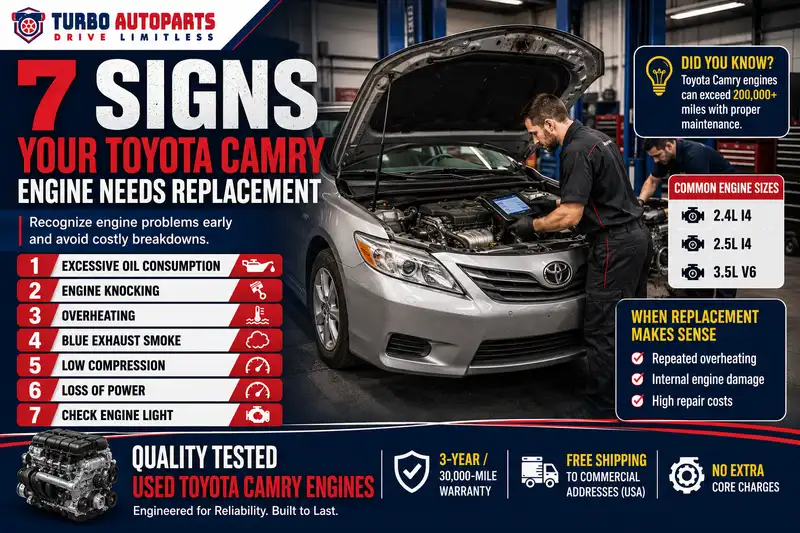
Toyota Camry engines are well known for their durability, fuel efficiency, and long service life. Many owners drive their vehicles well beyond 200,000 miles with routine maintenance. However, every engine eventually reaches a point where repairs become less practical than replacement. Recognizing early warning signs can help you avoid unexpected breakdowns and costly secondary damage. Whether you own a 2.4L four-cylinder, a 2.5L Dynamic Force engine, or a 3.5L V6, understanding these symptoms helps you make informed decisions. If you're considering a Toyota Camry engine replacement or searching for a used Toyota Camry engine, this guide explains the most common indicators that your engine may be nearing the end of its service life.
1. Excessive Oil Consumption That Continues to Increase
Many older Toyota Camry models, especially those equipped with the 2.4L 2AZ-FE engine, may begin consuming more oil as mileage increases. Adding oil between service intervals occasionally is not unusual. However, constantly topping off the engine often indicates worn piston rings, valve seals, or cylinder wall wear.
Blue smoke from the exhaust during acceleration is another common symptom. Ignoring this problem can eventually damage catalytic converters and oxygen sensors. If oil consumption continues despite proper maintenance, replacing the engine may become the most economical long-term solution.
High-search keywords: Toyota Camry engine replacement, Toyota Camry oil consumption, used Toyota Camry engine, Toyota engine problems.
2. Persistent Engine Knocking or Internal Noise
Engine knocking usually indicates internal mechanical wear. Low oil pressure, worn crankshaft bearings, damaged connecting rods, or excessive piston clearance often create deep metallic knocking sounds.
A slight ticking noise during startup may only require valve adjustment. However, loud knocking that increases with engine speed often signals serious internal damage. Continuing to drive under these conditions can lead to complete engine failure.
Professional diagnostics should always determine whether rebuilding or replacing the engine offers the best value.
3. Loss of Power and Poor Acceleration
A healthy Toyota Camry engine should deliver smooth and consistent acceleration. Noticeable power loss, hesitation, rough idling, or difficulty climbing hills often points toward declining engine performance.
Several issues may contribute to reduced power, including:
- Low engine compression
- Worn piston rings
- Damaged valves
- Timing chain wear
- Fuel delivery problems
- Excessive carbon buildup
While minor issues remain repairable, multiple internal failures usually indicate significant engine wear. Many owners buy used engine rather than investing in repeated repairs.
4. Overheating That Keeps Returning
One overheating incident does not necessarily require engine replacement. However, repeated overheating can permanently damage internal engine components.
Common causes include:
- Blown head gasket
- Warped cylinder head
- Cracked engine block
- Failed water pump
- Cooling system leaks
After severe overheating, coolant may mix with engine oil, reducing lubrication and accelerating internal wear. If compression tests confirm major damage, replacing the engine often proves more reliable than extensive rebuilding.
Routine cooling system maintenance significantly reduces the likelihood of catastrophic engine failure.
5. Low Compression Across Multiple Cylinders
Compression testing provides one of the most accurate ways to evaluate overall engine health.
Healthy cylinders maintain consistent compression levels. Significant differences between cylinders usually indicate:
- Worn piston rings
- Burned valves
- Head gasket failure
- Cylinder wall damage
Low compression affects starting performance, fuel economy, emissions, and overall drivability. If multiple cylinders fail compression testing, a Toyota replacement engine often restores factory performance more effectively than partial repairs.
6. Heavy Exhaust Smoke With Increasing Engine Problems
Exhaust smoke color often reveals internal engine conditions.
- Blue smoke usually indicates oil burning.
- White smoke may suggest coolant entering the combustion chamber.
- Black smoke often points toward excessive fuel consumption.
Persistent smoke combined with overheating, oil consumption, or compression loss generally indicates advanced engine wear. Diagnosing these symptoms early may prevent additional damage to the exhaust and emissions systems.
7. Repair Costs Continue to Exceed Engine Value
Many owners face a difficult decision after receiving multiple repair estimates.
Replacing timing components, repairing head gaskets, rebuilding cylinder heads, and correcting oil consumption can quickly become expensive. When several major repairs appear simultaneously, installing a quality used Toyota Camry engine may provide better long-term value.
Before replacing the engine, verify:
- Vehicle VIN
- Engine code
- Production year
- Transmission compatibility
- Emissions specification
Proper compatibility ensures smooth installation while maintaining original vehicle performance.
When Should You Replace Instead of Repair?
Minor maintenance items such as spark plugs, ignition coils, sensors, and water pumps rarely justify engine replacement.
However, replacement becomes worth considering when several major issues appear together, including:
- Severe oil consumption
- Internal knocking
- Low compression
- Cracked engine block
- Head gasket failure
- Repeated overheating
Evaluating repair costs against vehicle value helps owners choose the most practical solution.
Final Thoughts
Toyota Camry engines have earned an excellent reputation for reliability, but no engine lasts forever. Watching for excessive oil consumption, knocking sounds, overheating, compression loss, heavy exhaust smoke, and declining performance helps identify problems before complete failure occurs. Early diagnosis also allows owners to compare repair costs with replacement options more effectively.
If your engine has reached the end of its service life, choosing a properly matched used Toyota Camry engine can restore dependable performance while maintaining factory specifications.
Turbo Auto Parts supplies quality-tested used engines for sale for Toyota Camry and many other popular vehicles. Qualifying replacement engines include a 3-Year/30,000-Mile Warranty, free shipping to commercial addresses anywhere in the USA, and no extra core charges, helping owners replace their engines with confidence.